 ZenWrit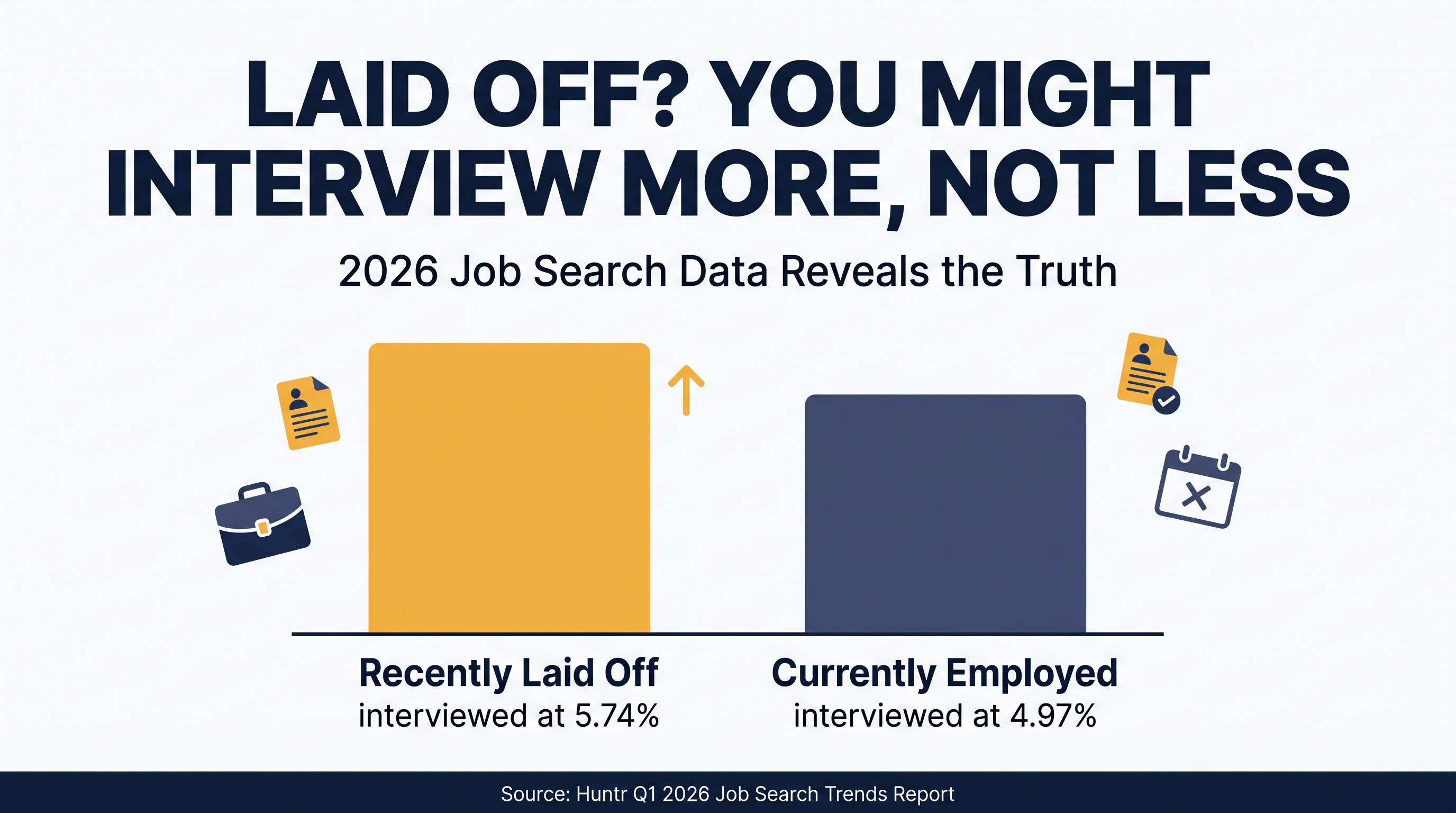
How to Explain an Employment Gap on Your Resume in 2026 (What the Data Actually Shows)
New 2026 data shows recently laid-off candidates now interview at a higher rate than currently employed ones. Here's the exact 3-part formula to explain any resume gap.

How to Explain a Resume Employment Gap (2026 Data)
New 2026 data shows recently laid-off candidates now interview at a higher rate than currently employed ones. Here's the exact 3-part formula to explain any resume gap.
If you have a gap on your resume right now, here is the short version: name the reason in one line, keep it factual, and move straight into what you did with the time or what you're bringing to the next role. Recruiters aren't scanning for a perfect timeline anymore — but they're weighing your explanation, not the gap itself. A vague timeline creates more doubt than an honest three-word reason ever will.
That's the formula. The rest of this guide is the data behind it, because in 2026 the data tells a different story than the advice you've probably already read.
The Gap Panic Is Outdated. Here's the Actual 2026 Data
Most gap-advice content still treats a resume gap like a red flag you need to apologize for. That advice is behind the market.
Global tech layoffs in 2026 had already crossed 123,305 jobs cut across 289 companies as reported September 2, 2026 — overtaking the full-year 2025 total of roughly 122,606 with four months still left in the year. That number keeps climbing, so treat it as a snapshot, not a live count. A gap isn't an anomaly on a 2026 resume.
And the interview data backs that up. Huntr's Q1 2026 Job Search Trends Report, built from 58,814 tailored applications across 1,773 job seekers between April 2025 and March 2026, found that candidates out of work for less than three months interviewed at a 5.74% rate — actually higher than the 4.97% rate for currently employed applicants. (For context, the same data showed 5.54% for 3–6 months out and 4.51% for 6–12 months.) Recently-gapped candidates are not getting fewer interviews. They're getting slightly more.
Why? The layoff numbers above are the reason: a recruiter reading your resume in 2026 is primed to assume "layoff" long before they assume "performance problem". You're not the outlier they're worried about. You're the pattern they already expect.
One honest limit on this data: Huntr's report measures interview rates by how long someone has been out of work. It can't tell you whether labeling the gap as caregiving, consulting, education, or anything else softens the penalty. So treat the formula and scripts below as expert advice from what works in practice — not as conclusions this data proves.
What Recruiters Actually Think When They See a Gap
This is the part most advice gets backwards — recruiters aren't judging the gap. They're judging what you say about it.
Novorésumé's December 2025 survey of 200+ U.S. recruiters and HR professionals found that 69.61% feel totally comfortable with resume gaps in their top candidates, as long as the gaps are well explained. Only 6.37% see a gap as a "major red flag" on its own. That's exactly why the one-line explanation matters more than hiding the gap ever could.
Compare that to frequent job-hopping, which draws far more scrutiny than a single gap: the same Novorésumé survey found 85.2% of HR pros become hesitant when they see a pattern of short tenure. A gap you can explain in a sentence is a smaller problem than a resume that looks like six one-year stints back to back.
The 3-Part Formula for Explaining Any Gap
Use this structure directly on your resume, in the work history section, as its own entry with dates — not buried in a summary paragraph.
1. Name it in three words or fewer. "Laid off — Q2 2025," "Family caregiving," "Return to school," "Health leave," "Relocation." No apology, no long justification.
2. Add one line of what happened during it. Freelance work, a certification, caregiving responsibilities, a course completed, volunteer work. This is the line that actually fills the timeline.
3. Bridge to what you're bringing now. One line connecting the gap period back to the role you're applying for — a skill sharpened, a certification earned, clarity on what you want next.
Example entry:
Career Break — Family Caregiving | Jan 2025–Aug 2025
Managed full-time caregiving for a family member. Completed a Google Project Management Certificate during this period and stayed current with industry tools through freelance consulting.
Scripts for the Four Most Common Gap Reasons
The formula above works for every gap, but the exact wording changes with the reason — because each reason raises a different unspoken question in the recruiter's head. Here are word-for-word scripts for the four I see most:
1. Layoff
The unspoken question: "Was it performance?" Answer it by being boring and factual about the cause, then pivot to output.
Career Break — Layoff (Company-Wide Restructuring) | Mar 2025–Jul 2025
Role eliminated in a company-wide restructuring. Used the time to complete an AWS Solutions Architect certification and shipped two freelance dashboard projects.
If the layoff was public, name the round: "affected by the March 2025 reduction of ~8% of staff" ends the speculation instantly. No one wonders about performance when the cut had a press release.
2. Caregiving
The unspoken question: "Are they actually available now?" Answer availability, not medical details.
Full-Time Family Caregiver | Jan 2025–Aug 2025
Managed full-time caregiving for a family member; situation now resolved. Completed a Google Project Management Certificate and stayed current with industry tools through freelance consulting.
You don't owe anyone the diagnosis, the relationship, or the medical timeline. "Situation resolved" is a complete sentence.
3. Education
The unspoken question: "Did they actually finish anything?" Name the credential and what it covered.
Education — Data Analytics Certification | Sep 2024–May 2025
Completed a 400-hour data analytics program covering SQL, Python, and dashboard design. Built a portfolio of five client-ready analyses.
If you didn't finish the program, say what you completed: "completed 24 of 30 credits toward an M.S. in Data Science" beats silence every time. Partial progress is still progress you can name.
4. Health
The unspoken question: "Can they handle the workload?" Keep it to one neutral line, then move straight to capability.
Health Leave | Jun 2025–Nov 2025
Took medical leave; fully cleared and available to start immediately. Kept skills current during recovery with freelance design work and an advanced Figma certification.
Never disclose a diagnosis on a resume. "Health leave" or "medical leave" is enough — details belong in a conversation you choose to have, if ever.
How This Actually Gets Parsed by ATS Software
This is the part most gap-advice articles skip, and it's the one that matters most if you're applying through a portal.
If you add a gap-filling entry — something like "Family Caregiver" or "Professional Sabbatical" with real dates — you're giving the parser a dated entry to read instead of a blank hole in your timeline. Now the honest caveat: I can't promise that every ATS treats that entry exactly like a job. These systems vary wildly, and no public study has tested how gap entries parse across the major platforms. Anyone making that universal claim is guessing.
The part that actually decides whether you get seen is more concrete: keyword match against the job description is the main lever you control in ATS ranking. A resume that speaks the job description's language will score better than one that doesn't — gap or no gap. So closing the keyword gap matters more than closing the timeline gap. Run your resume through our ATS Resume Checker to see your current match score, and use our guide on how to align your resume with a job description using AI to fix the keyword gap that's probably costing you more interviews than your employment gap ever will. If you're unsure what a "good" score even means, our ATS score bands breakdown explains exactly where 50, 65, and 85+ fall.
What Not to Do
Don't fudge the dates. It backfires more often than people expect. Background checks, reference calls, and simple date math catch this constantly — and a caught date discrepancy damages trust far more than an honest three-month gap ever would.
FAQ
Do I need to explain a gap shorter than 3 months? Generally no — and be clear this is a rule of thumb from recruiters and resume writers, not a data cutoff. Short gaps between roles are normal and rarely flagged. Focus your explanation effort on gaps of 4+ months.
Should I put the gap explanation in my cover letter instead of my resume? Put a short version on the resume as its own timeline entry so it doesn't look hidden, and optionally expand on it in one sentence in your cover letter if it's directly relevant to the role.
What if my gap was for a reason I'd rather not disclose? You don't have to disclose the specific reason. "Personal leave" or "Career break" are acceptable, neutral entries — you're not obligated to explain further at the resume stage.
Does a gap hurt more in tech than other industries? Less than you'd expect right now. With layoffs concentrated in tech through 2026, recruiters in that sector are, if anything, more used to seeing gaps than most other industries.
Sources: Huntr Q1 2026 Job Search Trends Report (58,814 tailored applications, 1,773 job seekers, April 2025–March 2026); Novorésumé survey of 200+ U.S. recruiters and HR professionals, December 2025 (via December 4, 2025 press release); Layoffs.fyi tracker via Free Press Journal, September 2, 2026.
Was this article helpful?
Be the first to rate this article
Get weekly resume tips
Practical ATS and job search advice every week. No fluff, unsubscribe anytime.
Keep reading
 Careers
How to Explain Being Fired on a Resume (Without Wrecking Your Job Search)
11 min read
Read article → Careers
How to Write a Resignation Letter: Examples, Templates, and the Two Weeks' Notice Rule
10 min read
Read article → Careers
How to Write a Thank You Email After an Interview: Examples, Subject Lines, and Timing That Works
10 min read
Read article →
Is your resume ATS-ready?
Run a free compatibility check — no account, no limits, nothing stored.
Check my resume