 ZenWrit
How to Write a Thank You Email After an Interview: Examples, Subject Lines, and Timing That Works
Sixty-eight percent of hiring managers say a thank-you note influences their decision — yet most candidates skip it. Here's how to write one that actually helps.

The interview is over. You're replaying every answer in your head, trying to decide whether "we'll be in touch" was genuine or a polite goodbye.
Here's the part that makes this one of the easiest edges in the whole job search: almost nobody does it. An Accountemps survey of 300 HR managers found that 80% consider thank-you notes when making hiring decisions, but only 24% of candidates send them — down from 51% in 2008. So while everyone else treats the interview as finished the moment they leave the building, you can land a second, well-timed impression right while the decision is still warm.
This guide covers the timing, the structure, the subject lines, and three templates you can adapt — plus the 2026-specific trap to avoid: letting AI write the whole thing for you.
Why a short email actually moves the needle
Think about the hiring manager's week. They interview five to eight candidates, all of whom were screened, scored, and shortlisted. By Friday, the conversations blur together. Two finalists have similar skills. The decision comes down to enthusiasm, professionalism, and fit — and that's exactly where a thank-you note lands. And remember: they skim. Recruiters spend roughly seven seconds on a first resume scan (https://zenwrit.com/blog/how-long-recruiters-spend-resume-eye-tracking-2026), and they'll spend even less on your email — which is why short and specific wins.
The numbers back this up:
- 68% of hiring managers say a thank-you note impacts their hiring decision (TopResume, 2024).
- Nearly 1 in 5 interviewers have dismissed a candidate for not sending one (TopResume, 2024).
- 80% of HR managers consider thank-you notes when selecting a candidate (Accountemps/Robert Half survey of 300 HR managers, 2017).
- 31% of professionals don't send a thank-you after every interview, and 7% never send one at all (TopResume, 2024).
One note of honesty: the numbers aren't perfectly consistent — CareerBuilder's survey (via Apollo Technical, September 2026) puts the share who send notes at 57%, versus 24% in the Accountemps and Breezy HR data. Different surveys, different methods — but every source agrees a large share of your competition skips this entirely.
Send it within 24 hours — ideally tonight
Timing matters more than polish. Send your thank-you email the same evening, or by the following morning at the latest. Here's why: hiring teams often debrief quickly, sometimes the same day. An email that arrives while the conversation is fresh does double duty — it reminds them who you are and demonstrates the follow-through they want in an employee.
It also solves a darker problem. According to Greenhouse's 2024 State of Job Hunting report (2,500 workers across the US, UK, and Germany), 61% of job seekers have been ghosted after an interview — up 9 points since April 2024. The note is the one post-interview touchpoint you fully control.
A few timing rules:
- Same day beats next day. If your interview ends at 3 PM, aim to send by 8 PM.
- After a Friday interview, send it Friday evening anyway. Monday morning is the absolute deadline — no hiring manager has ever rejected a candidate for thanking them too fast.
The anatomy of a great thank-you email
Every effective thank-you email has the same six parts, and the whole thing should stay under 200 words. Brevity is a feature — a hiring manager skims, they don't study.
1. A specific subject line. Not "Thank You" alone. Name the role and, if it was a panel, keep it to the person you're writing to. More on this in the subject-line bank below.
2. A real greeting. "Dear Ms. Khan," or "Hi Ahmed," — use whatever form of address the interview used. When in doubt, go slightly formal.
3. The genuine opener. One line of real thanks. Skip the corporate poetry.
4. The callback — the most important part. Reference one specific thing from your conversation. The project they mentioned, the challenge they're hiring for, the team joke that landed. This is what separates a real note from a template, and it's what the interviewer actually remembers.
5. The tie-in. One sentence connecting your experience to something they need — not a second pitch, a single line.
6. A clean close. Thank them again briefly, say you're excited about the role, and sign off with your full name and phone number.
Subject lines that actually get opened
The subject line is the only part guaranteed to be read, so don't waste it on a lone "Thank You." Match the situation:
| Situation | Subject line |
|---|---|
| Standard, one interviewer | Thank you — Senior Analyst interview today |
| You liked the person | Thank you, Sarah — enjoyed our conversation today |
| Panel interview | Thank you — Product Designer interview with the team |
| Phone screen | Thank you for the call — Account Executive role |
| Final round | Thank you — excited about the [Job Title] opportunity |
| Video interview | Great speaking today — thank you, [Name] |
| You want to reference something specific | Thank you — and a thought on [the project they mentioned] |
Keep it under 50 characters where you can. The hiring manager is reading it on a phone between meetings.
Three templates that don't sound like templates
Use these as starting points, not scripts. The golden rule: if you could swap in any other company and role without changing a word, it's too generic — the same trap we covered for cover letters (https://zenwrit.com/blog/cover-letter-openings-that-dont-sound-like-ai).
Template 1: After a phone screen
Subject: Thank you for the call — Marketing Manager role
Hi Fatima,
Thanks for taking the time to speak with me today. Your point about the team's shift toward retention over acquisition really stuck with me — that's exactly the kind of problem I enjoy working on.
After our conversation, I'm even more interested in the role. I've attached nothing further here, but I'm happy to share samples of the lifecycle campaigns I mentioned whenever useful.
Best regards, Ahmed Raza 0300-XXXXXXX
Template 2: After an in-person or panel interview
Subject: Thank you — Operations Lead interview with the team
Dear Mr. Sheikh,
Thank you for the conversation this afternoon. I particularly enjoyed hearing how the operations team navigated the warehouse expansion — the way you described balancing speed with accuracy told me a lot about how the company works.
My experience scaling a similar rollout at my previous employer lines up closely with what you're building. I'm genuinely excited about the possibility of contributing.
Best regards, Ahmed Raza 0300-XXXXXXX
Template 3: After a final round
Subject: Thank you — excited about the Data Analyst opportunity
Hi Maria,
Thanks again for today's conversations with you and the team. The dashboard project you described is exactly the kind of messy, high-impact work I do best — and it was great to hear how the team thinks about data.
I want the role, and I believe I'd make an immediate difference. Please don't hesitate to reach out if any questions come up on your end.
Warm regards, Ahmed Raza 0300-XXXXXXX
Notice what each template does: one specific callback from the conversation, one line tying experience to the role, no begging, no essays. Match the warmth of the interview — casual with casual, formal with formal.
The 2026 problem: don't let AI write the whole thing
Here's the trap everyone is falling into this year. Tools make it trivially easy to generate a thank-you email in seconds, and hiring managers are getting very good at spotting them. A note that says "Thank you for the insightful conversation about the role's exciting opportunities" could have been written for any job, at any company, by anyone. It adds nothing.
Worse, it can actively hurt. The callback section — that one specific detail from your conversation — is the entire reason the email works. AI doesn't know what the interviewer said about the warehouse expansion. Only you do.
That's not to say you can't use AI at all. Use it the way you'd use a good editor: paste your draft in, ask it to tighten the wording, check the tone. But the content — the specifics, the genuine observation — has to come from you. Five minutes of your own words beats thirty seconds of generated polish every time.
What if you don't have the interviewer's email?
This is more common than you'd think. You have three options, in order of preference:
- Ask the recruiter. Reply to the scheduling email: "Could you pass along my thanks to [Name], or share their email?" Recruiters do this daily — it's a completely normal ask.
- Check LinkedIn. If you're connected, a short LinkedIn message works. Keep it even shorter than an email — three or four sentences. (And since recruiters check LinkedIn before interviews, make sure your profile is ready — https://zenwrit.com/blog/how-recruiters-use-linkedin-background-check)
- Go through the company website. Some firms list team emails in predictable formats. This is the last resort, and only if you're confident about the format — a bounced or wrong email is worse than none.
If all else fails, the recruiter route almost always works. Don't skip the note just because the address wasn't handed to you.
After the thank-you: the follow-up timeline
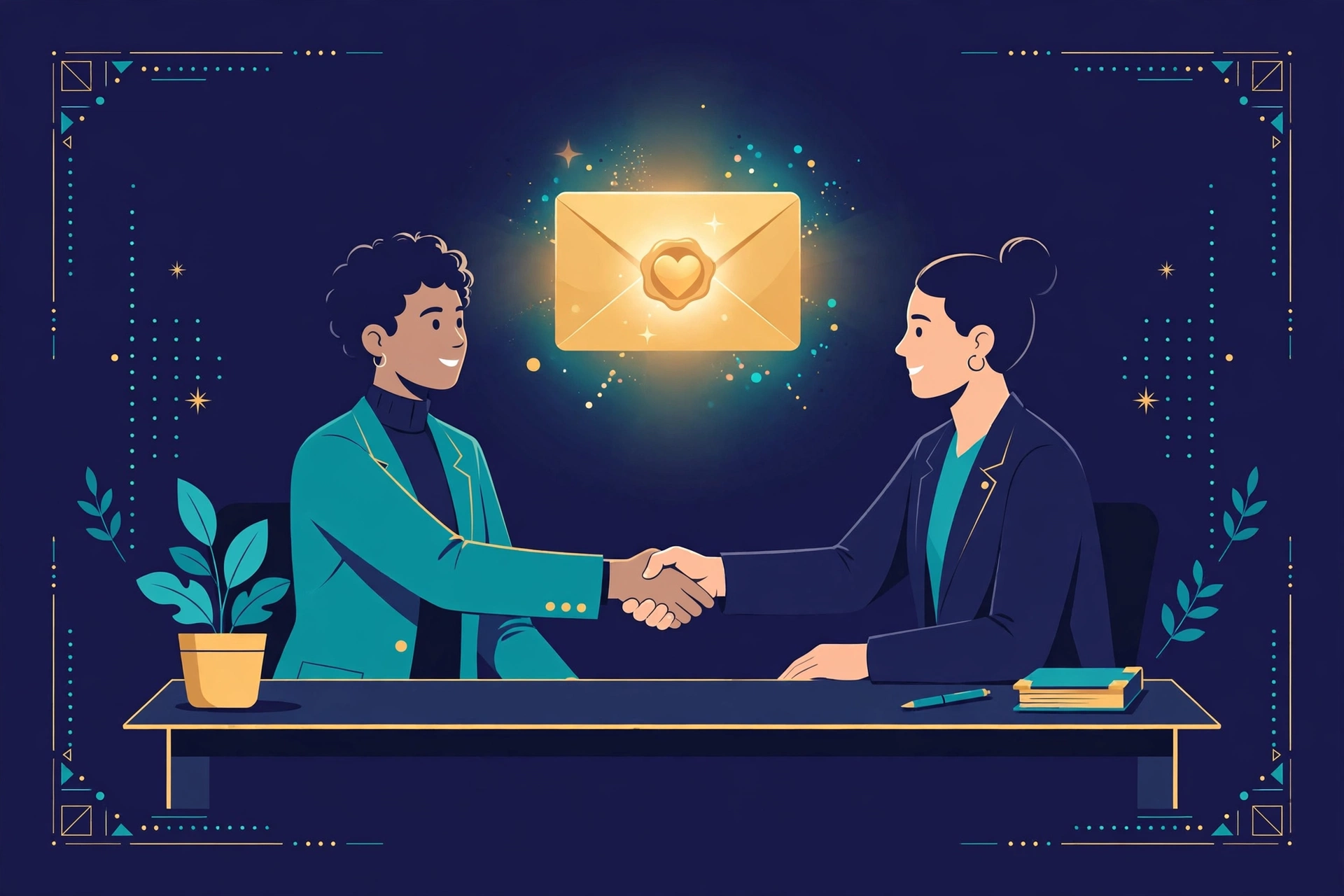
The thank-you email is the first move, not the only one. Here's what comes next:
- No reply after a week? Send one polite check-in: "Hi [Name], just following up on the [Role] position. Still very interested — happy to provide anything else that would help." Short, warm, no guilt-tripping.
- Ghosted? Give it two to three weeks, then one final follow-up. After that, move on with your head up.
- Rejected? Reply gracefully and ask for feedback: "Thanks for letting me know. If you have a moment, I'd appreciate any feedback — I'm keen to keep improving." Greenhouse's 2024 Candidate Experience Report found 79% of candidates would reapply to a company if they received feedback after an interview — staying in the pipeline costs you one email.
And remember which direction ghosting flows these days. SHRM's 2025 Talent Trends data found 41% of HR professionals say candidates ghosting them is a recruiting challenge. In a market where employers are also chasing reliability, a candidate who communicates clearly at every step stands out automatically.
The bottom line
A thank-you email after an interview takes five minutes. It costs nothing. And with 68% of hiring managers saying it influences their decision (TopResume, 2024) — while most candidates skip it entirely — it's one of the highest-ROI moves in the entire job search.
Write it tonight. Keep it short, specific, and in your own words. Then let it do its quiet work while the decision is being made.
One last thought: the thank-you email only works if you actually get the interview — and getting the interview starts with a resume that survives the first cut. Run yours through ZenWrit's free ATS resume checker to see how it scores against the systems employers use.
Frequently asked questions
Is a thank-you email after an interview really necessary?
Not strictly — but 68% of hiring managers say it influences their decision, and nearly 1 in 5 have dismissed a candidate for not sending one (TopResume, 2024). When the effort is five minutes, "necessary" is the wrong question.
What's the best subject line for a thank-you email?
Name the role and the person or situation: "Thank you — [Job Title] interview today" or "Thank you, [Name] — enjoyed our conversation." Avoid a bare "Thank You" — it's invisible in a crowded inbox. See the subject-line bank above for situation-specific options.
How soon should I send it?
Within 24 hours, ideally the same evening. Hiring teams often debrief quickly, and an email that arrives while the conversation is fresh doubles as a reminder of who you are. After a Friday interview, send it Friday night — don't wait until Monday.
Should I send a thank-you email after a phone screen or video interview?
Yes — the same 24-hour rule applies. A phone screen is often the first human filter in the process, and a short, specific note after it sets you apart just as much as after an in-person round.
What if I forgot to mention something important in the interview?
Add one line to your thank-you email — no more. Something like: "One thing I didn't get to mention: I've also led a similar migration project, which may be relevant." Keep it brief; the email is a thank-you, not a second pitch.
Email or handwritten note?
Email. An Accountemps survey of HR managers found 94% consider email appropriate versus 86% for handwritten notes — and email arrives before the decision does.
Was this article helpful?
Be the first to rate this article
Get weekly resume tips
Practical ATS and job search advice every week. No fluff, unsubscribe anytime.
Keep reading
 Careers
How to List Freelance Work on Your Resume (So It Looks Like Experience, Not a Gap)
9 min read
Read article → Careers
How to List Certifications on Your Resume (So Recruiters Actually Notice Them)
9 min read
Read article →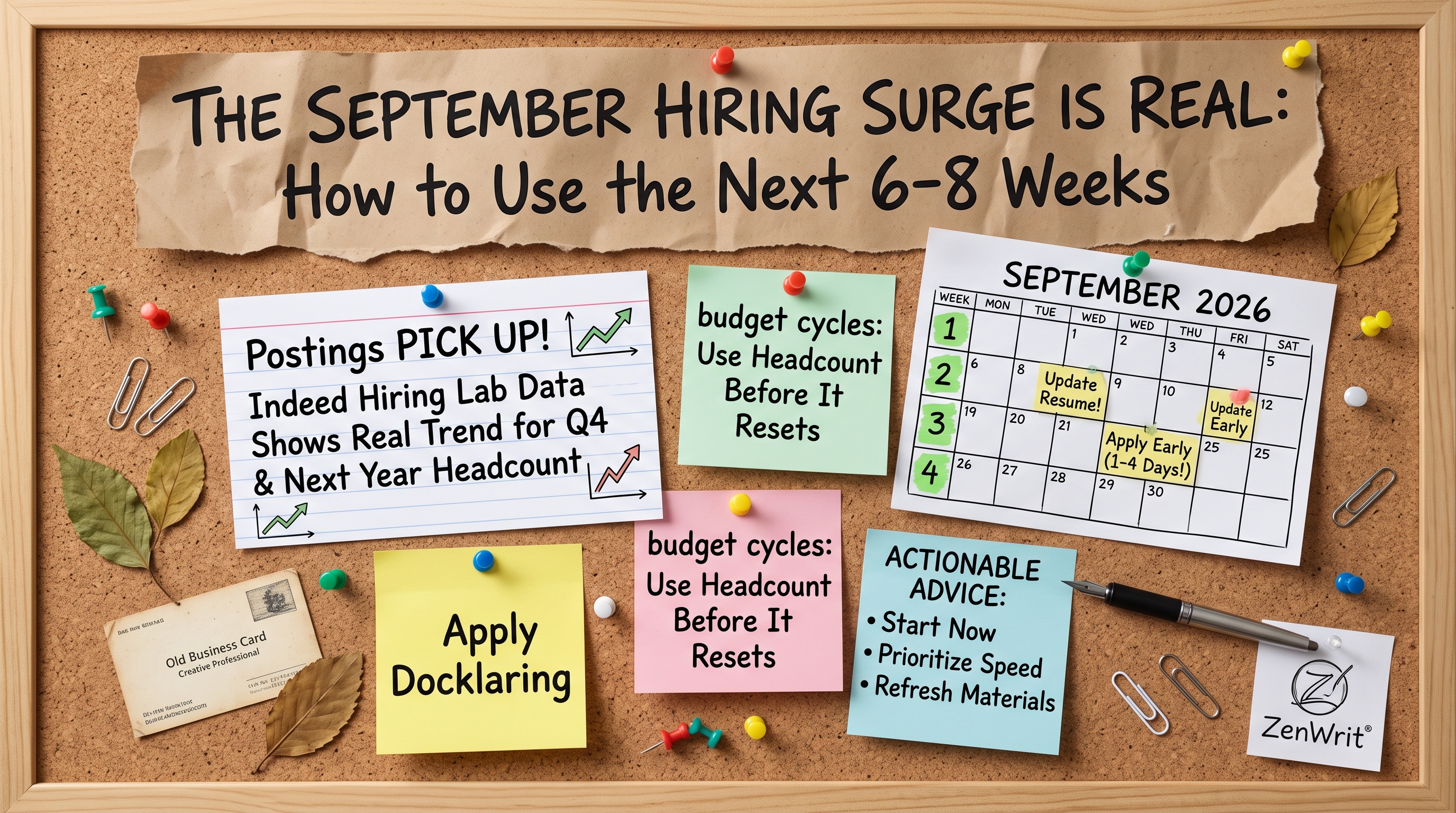 Careers
The September Hiring Surge Is Real Here's How to Actually Use It
7 min read
Read article →
Is your resume ATS-ready?
Run a free compatibility check — no account, no limits, nothing stored.
Check my resume