 ZenWrit
Resume Red Flags Recruiters Spot in Seconds (2026 Survey Data)
Typos kill 85% of applications; unexplained gaps and job hopping tank the rest. What Jobera's 2026 recruiter survey says actually gets your resume rejected — plus a 70-second self-audit.

Resume Red Flags Recruiters Spot in Seconds (2026 Survey Data)
Here's a number that should make you slightly nervous: recruiters spend about 7 seconds on their first scan of your resume before deciding whether to keep reading. That's from the Ladders eye-tracking research that's been cited by practically every hiring study since, and Novorésumé's 2026 hiring report confirms the habit hasn't changed.
Seven seconds. That's not enough time to read your accomplishments. It is, however, plenty of time to spot something wrong.
I went through two fresh datasets for this one — Jobera's 2026 recruiter survey of 32 specific resume red flags, and Novorésumé's survey of 200+ US recruiters and HR professionals published in December 2025. The results are genuinely surprising: the things that feel like red flags to job seekers aren't the ones recruiters reject for — and the real killers are the things people rarely worry about.
What the 2026 data actually says
Jobera's survey surfaced something the researchers themselves flagged: four red flags make roughly half of recruiters go "hmm" — typos and grammar errors (58%), employment gaps (55%), job hopping (52%), and vague job descriptions (50%).
But "considering something a red flag" and "rejecting someone for it" are two different decisions, and the gap between them is where most job seekers get this wrong. Typos: 58% of recruiters call them a red flag, but 85% have actually turned down applicants because of them. Meanwhile, only 8% list "lies on resume" as a red flag — but 77% have rejected candidates over it.
The big four: what makes half of recruiters flinch
1. Typos and grammar errors (58% flag it, 85% have rejected for it)
This is the most lopsided number in the entire Jobera dataset, and honestly it's the easiest one to fix — which makes it the most tragic.
Think about it from the recruiter's side. Your resume is a writing sample. If your two-page marketing document for yourself contains errors, the recruiter's mental leap is instant: this person is either careless or not detail-oriented, and either way, they didn't bother to proofread the single most important document of their job search. I know that feels unfair when you've applied to 80 jobs this month and you're exhausted. It doesn't change the math.
The fix is unglamorous but effective. Read it backwards — literally, last line to first — because that breaks your brain's habit of auto-correcting familiar text. Run it through a grammar checker, then have one other human read it.
2. Unexplained employment gaps (55% flag it, 69% have rejected for it)
Here's where the nuance gets interesting, because Novorésumé's data complicates the Jobera numbers in a useful way. According to their 200+ recruiter survey, only 6.4% of HR professionals always consider an employment gap a major concern, regardless of explanation. And 69.3% say the story behind the gap plays a huge role in how they judge it — meaning they base their judgment on the context you provide.
So the red flag isn't the gap. It's the silence around it.
A two-year gap with a one-line explanation — "Career break: full-time caregiving, returned with AWS Solutions Architect certification" — reads completely differently than the same gap with nothing. The former is a story; the latter is a question mark, and recruiters reject question marks. Nearly 7 out of 10 of the recruiters in Novorésumé's survey said they're comfortable with gaps in top candidates as long as they're well-explained.
If you've got a gap, own one line of your resume for it: what you were doing, what you earned during it, and when you re-entered. You don't owe anyone your life story, but you do owe the scan a complete timeline.
3. Job hopping (52% flag it, 84% have rejected for it)
This one hurts because it's the red flag where recruiters are least forgiving — and it keeps getting worse. Novorésumé found that 85.2% of HR professionals consider frequent job changes a red flag, compared to much more lenient attitudes toward gaps. Only about half will still hire a suspected job hopper even if they're otherwise relevant.
The reason is economic, not moral: it costs companies an average of $4,683 to hire a new employee (Novorésumé's report), and hiring someone who gets bored after six months is one of the most expensive mistakes a manager can make. Recruiters aren't judging your ambition. They're pricing your flight risk.
If your history looks hoppy, group short contract roles under one heading ("Contract engagements, 2023–2025") with the individual projects listed beneath — honest, and it reframes scattered dates as intentional contracting. For permanent roles, a summary line showing the throughline ("three progressive fintech roles in 4 years") tells the recruiter the story before their pattern-matching does it for them.
4. Vague job descriptions (50% flag it, only 36% have rejected for it)
Half of recruiters flag vagueness, but only a third have actually rejected for it — which tells you this is more of a "you're boring me into the maybe pile" problem than an instant-kill. "Responsible for customer service" and "assisted with various marketing initiatives" are the classic offenders. They describe duties, not impact.
The conversion is mechanical: take every bullet and ask "so what?" until you hit a number, an outcome, or a scale. "Resolved 50+ customer issues daily, maintaining a 94% satisfaction rating" is the same job as "responsible for customer service" — but one of them survives the 7-second scan and the other doesn't.
The silent killers: low "red flag" scores, massive rejection rates
Now the interesting part. Some of the deadliest resume problems barely register when recruiters are asked about red flags — but they reject for them at devastating rates.
Lies on your resume: 8% call it a red flag, 77% have rejected for it. The discrepancy makes sense — nobody thinks of dishonesty as a "resume formatting issue," they think of it as disqualifying. And the background-check data backs up why recruiters are on edge: HireRight's 2025 Global Benchmark Report found that more than three-quarters of employers globally uncovered candidate discrepancies in the previous 12 months. One in six had already experienced outright identity fraud in hiring, and another three in ten weren't sure whether they had.
The 2026 landscape makes this worse, not better. Gartner projects that by 2028, about one in four job candidates worldwide could be partly or fully fake — AI-generated profiles, stolen identities, or some mix. A January 2025 survey of job seekers reported by SecurityBrief NZ found 44% admitted to lying somewhere in the hiring process, with 24% specifically falsifying their resumes and 33% misrepresenting their education. Only 19% of hiring managers said they were confident they could detect a fraudulent applicant at all.
The verification machinery is getting more aggressive every year, and the margin between "embellished" and "caught" is shrinking. If you're light on experience, our fresh-graduate resume guide shows how to write a strong resume with no experience — no fiction required.
Career path that doesn't fit: 25% flag it, 83% reject. Unrelated work experience: 6% flag it, 84% reject. Same pattern. Recruiters don't list "this person is applying for the wrong job" as a red flag — they just quietly move on. If you're pivoting, the bridge has to be explicit: a summary that translates your past into their future, transferable skills front and center.
The 2026-specific red flag: AI-generated resumes
Jobera's survey found 10% of recruiters flag AI-generated resumes, and 37% have rejected applicants over them. That sounds low until you hear what hiring managers are actually saying. A 2025 Resume Genius survey of 625 US hiring managers found AI-generated content is now their top resume concern: 53% are apprehensive about resumes containing AI-generated content, and 20% call it a "critical issue" that could block a candidate's selection.
The tell isn't that you used AI — it's that you didn't edit. Recruiters describe the pattern instantly: identical bullet structures, buzzword density higher than fact density, a summary that reads like a headline generator, and skills that mirror the job description a little too perfectly. I wrote about the specific triggers in detail in our AI-written resume guide — the short version is: use AI to brainstorm and tighten, but the first draft should be yours, and every claim should be something you can defend in a phone screen.
The fixable surface stuff (stop losing interviews to these)
These won't surprise anyone, but the rejection numbers are still worth staring at:
- Unprofessional email address: 35% flag, 64% have rejected.
partydude92@is doing you no favors. Firstname.lastname@ is free and takes four minutes. - Formatting and design: 30% flag, 51% have rejected. Fancy templates with graphics, tables, and multi-column layouts don't just look unprofessional to recruiters — they break in applicant tracking systems. Single column, standard headings, standard fonts. Boring is a feature.
- No customization: 22% flag, 56% have rejected. Sending the same resume everywhere is the second-laziest thing on this list, and recruiters can smell a generic application. Mirror the posting's keywords in your skills section and bullets, then run it through our free ATS checker to confirm the match rate before you submit.
- Keyword stuffing: 4% flag, 20% have rejected. Yes, keywords matter for the ATS — but a skills section that reads like a tag cloud gets noticed by humans too, and not kindly. Our ATS score bands guide explains what your match number actually means.

The 10-second self-audit
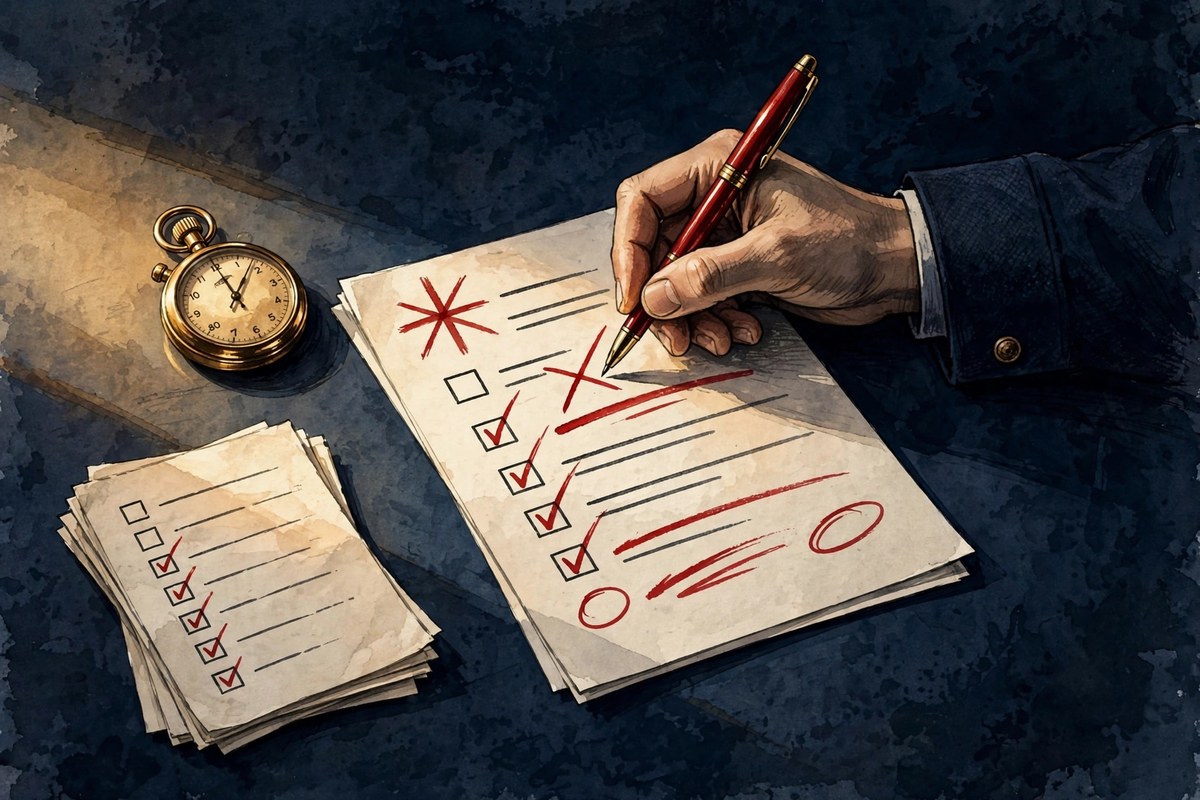
Before your next application, run this checklist. It takes ten seconds per item, which is conveniently the same budget a recruiter gives you:
- Read your contact line. Professional email? Correct phone? Done.
- Scan for typos — backwards, last line first.
- Every date accounted for? Any gap longer than six months gets a one-line explanation.
- Job tenures: anything under a year that isn't labeled contract/freelance gets a framing fix.
- Each bullet answers "so what?" with a number, outcome, or scale.
- Read your summary out loud. If it sounds like a chatbot wrote it, rewrite it in your own words.
- Check that your skills section mirrors the posting's actual keywords — not synonyms, the posting's words.
That's it. Seven checks, roughly seventy seconds, and you've eliminated the top rejection drivers in the 2026 data.
FAQ
What is the biggest red flag on a resume in 2026?
By the numbers: typos and grammar errors. Jobera's 2026 survey found 58% of recruiters consider them a red flag and 85% have actually rejected applicants because of them — the highest rejection rate of any red flag measured. They're also the easiest to fix, which makes them the most avoidable way to lose an interview.
Do employment gaps still matter in 2026?
Less than job seekers think, more than "nobody cares." Novorésumé's 2025 survey of 200+ US recruiters found only 6.4% always treat gaps as a major concern, while 69.3% judge them based on the context provided. The red flag is an unexplained gap, not the gap itself — one honest line explaining it neutralizes the concern for most recruiters.
Is job hopping worse than an employment gap?
According to the data, yes. Novorésumé found 85.2% of HR professionals consider frequent job changes a red flag, and only about half would still hire a suspected job hopper. For gaps, nearly 7 in 10 recruiters are comfortable as long as the gap is explained. If your history looks hoppy, group contract roles under one heading and show the throughline in your summary.
Can recruiters tell if my resume was written by AI?
Increasingly, yes — and they're specifically looking. A 2025 Resume Genius survey of 625 US hiring managers found AI-generated content is their top resume concern, with 53% apprehensive about it. The signals are contextual: identical bullet structures, buzzword-heavy summaries, and keyword mirroring that's a little too perfect. Use AI as an editor, not a ghostwriter.
Will lying on my resume actually get caught?
More likely every year. HireRight's 2025 Global Benchmark Report found over three-quarters of employers uncovered candidate discrepancies in a single year, and verification is getting more aggressive as AI-generated applications rise. Only 8% of recruiters in Jobera's survey list dishonesty as a "red flag," but 77% have rejected candidates over it. It's not a red flag — it's a disqualifier.
The bottom line
The 2026 data tells a surprisingly kind story: the most common rejection reasons are the most fixable. Typos, unexplained gaps, vague bullets, an unprofessional email — none require you to be a better candidate. They require a more careful edit.
The one thing editing can't fix is fit, which is why the last step matters most: tailor the resume to the posting, mirror its keywords honestly, and check your match before you apply. Run your resume through ZenWrit's free ATS checker — it scores your keyword match against the job description and flags exactly what's missing. Seventy seconds of auditing now beats seventy applications into the void.
Sources: Jobera, "32+ Red Flags in Your Resume That Make It Harder to Get a Job" (2026 study); Novorésumé Hiring Landscape survey of 200+ US recruiters and HR professionals (December 2025); HireRight 2025 Global Benchmark Report; Resume Genius survey of 625 US hiring managers (2025); Ladders eye-tracking research; Gartner candidate-fraud projection via SecurityBrief NZ (September 2026).
Was this article helpful?
Be the first to rate this article
Get weekly resume tips
Practical ATS and job search advice every week. No fluff, unsubscribe anytime.
Keep reading
 Careers
Resume Red Flags Recruiters Spot in Seconds (2026 Survey Data)
10 min read
Read article → Careers
Remote-Work Resumes in 2026: How to Beat 300+ Applicants for the Same Role
10 min read
Read article → Careers
How to Write a Resume for a Career Change in 2026: The Pivot Playbook
11 min read
Read article →
Is your resume ATS-ready?
Run a free compatibility check — no account, no limits, nothing stored.
Check my resume